
A Time Line of Jamaican Cuisine
“I grew up with coconuts as the main flavor in food in Jamaica. It’s part of our culture”
— Ziggy Marley
Jamaica was originally inhabited by the Arwacks and the Caribs. The Arwacks, mainly survived on corps such as , papayas, maize (corn), potatoes, peanuts, peppers, and beans. The Caribs prayed on the Arwacks and would cannibalize them during religious festivals.
For meat, the Arwacks roasted meat, turtle, and seafood on wooden sticks called barbacoa. Barbacoa would eventually become the English word barbecue.

The arrival of the Spanish in 1494, brought sugar cane, lemons, limes, and coconuts to the island. Spanish settlers also imported pigs, cattle, and goats. Jewish Spanish settlers brought traditional Jewish dishes like escovitch fish.
West Africans slaves brought to Jamaica to work the sugar cane fields brought fruits such as ackee and vegetables like callaloo. Jamaican jerk sauce originated with sauces brought by the African slaves to keep meat fresh.
Ackee would later become one half of Jamaica’s fruit and one half of the national dish of ackee saltfish . Enslaved Africans also brought okra, peanuts, and a variety of peas and beans.
In 1655, the Spanish colony of Jamaica was captured by the British Empire. England would rule Jamaica from 1655 to 1962. The British brought tea and baked pastries to the island. During the 1650s, Oliver Cromwell forcibly deported thousands of Irish and Scottish rebels to Jamaica. He hoped that the harsh Caribbean climate would kill most of them. Instead, today people of Irish decedent are the second largest ethnic group on the island. The Irish influence on Jamaican cuisine is reflected in popular dishes like baked cabbage and cornbread.
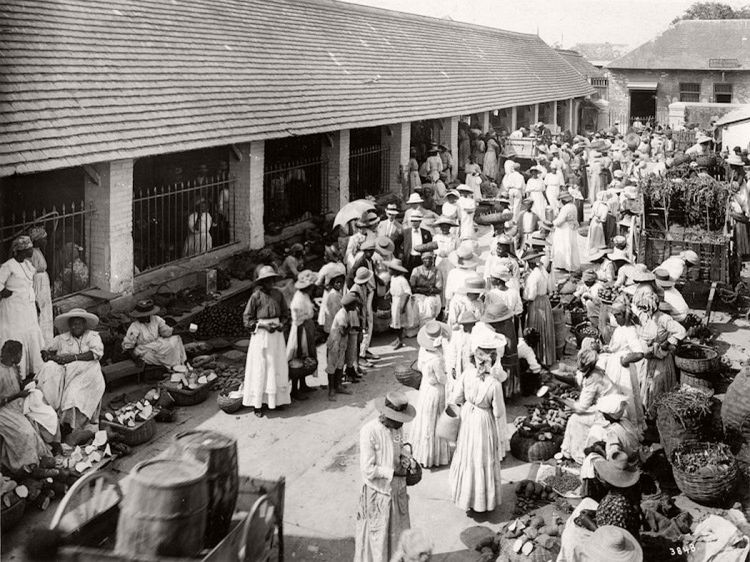
On July 30, 1854, the first Chinese immigrants arrived in Jamaica with the promise of new jobs and opportunities . Most of these new immigrants were Hakka Chinese and today most Chinese Jamaicans are of Hakka origin. Soon enough, Chinese cooking began to influence Jamaican cooking practices. Dumplings, suey mein a soup with noddles, shrimp, and vegetables are popular among the Jamaican diaspora.
During the 1840s, the economic and social conditions within British India began to decline. Because of this 36,000 Indians immigrated to Jamaica to work as indentured servants. Jamaican Indians were the first ethnic group in Jamaica that was able to grow rice on a large scale, leading the establishment of Jamaica’s first rice mill in the 1890s. Jamaican Indians introduced curry goat, eggplant, okra, and roti to Jamaican cuisine.
 Irie Cooking